Post-Construction Cleaning
Construction dust removed from every surface before the walkthrough.
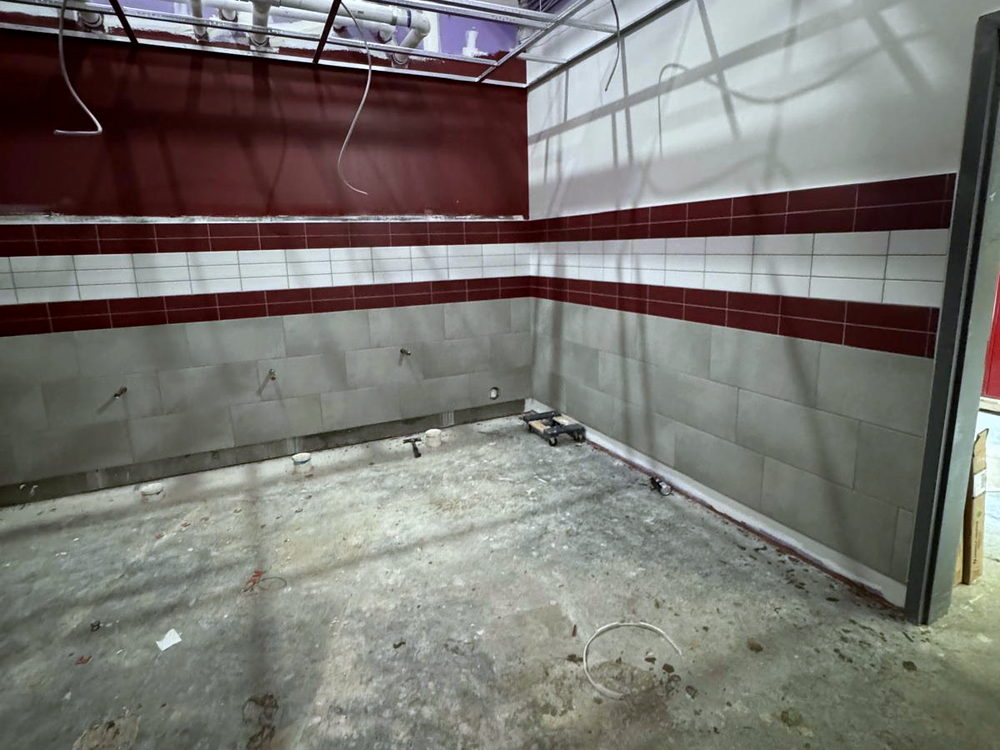
How we approach post-construction cleaning
Construction dust is not household dust. It is ground gypsum, silica, sawdust and joint compound, and it is fine enough to stay airborne for hours and settle on every horizontal and vertical surface in a building, including the ones nobody thinks about: the tops of door casings, the inside of light coves, the upper track of a window, the return grille of an air handler. Wiping the obvious surfaces once produces a room that looks clean and turns dusty again by the next morning.
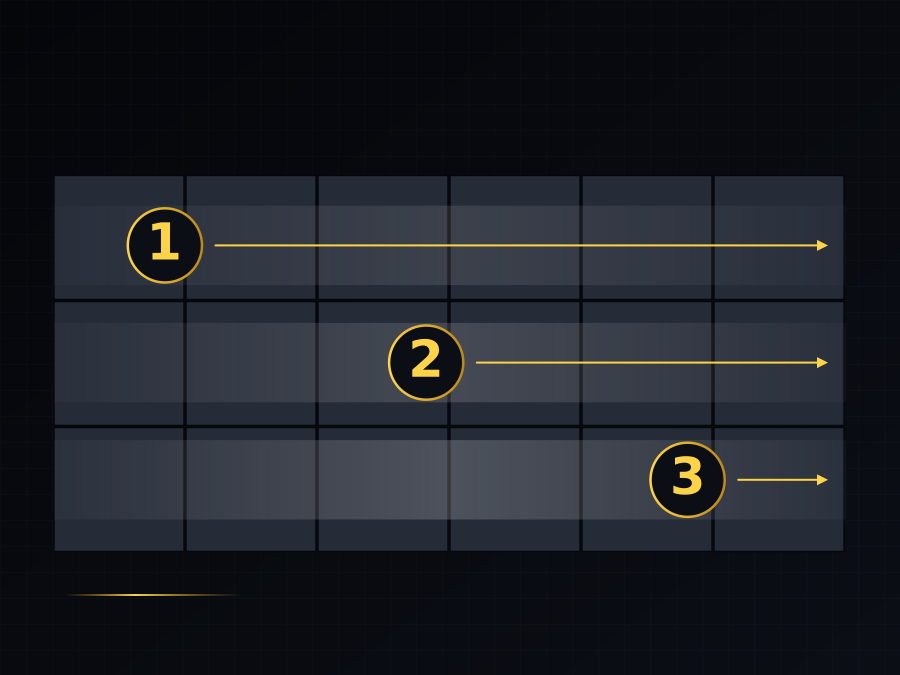
The reason is that dust falls. Cleaning bottom to top guarantees you will re-dirty what you just cleaned. Every post-construction clean we do runs top to bottom and in three passes. The first pass is rough: debris removal, stickers and labels off, protective film pulled, heavy residue and tape removed. The second is detail: every surface wiped, cabinets cleaned inside and out, fixtures and hardware polished, glass and tracks done. The third is the settling pass, after the dust that was in the air during pass two has landed.
Different residues need different methods. Joint compound haze comes off glass with a controlled scrape and the right solution, not with an abrasive pad that scratches. Paint overspray on hardware and glass needs solvent and patience. Adhesive from protective film needs a citrus-based remover. Grout haze on new tile needs an acidic cleaner used carefully, and thinset on a finished floor needs to be softened rather than chipped.
The surfaces that fail a builder's walkthrough are predictable, which is why we work from a list rather than from impression: window tracks and weep holes, the top edge of every door, inside cabinet drawers and toe kicks, HVAC registers, light fixture interiors, the ledge above shower niches, electrical plate edges, and the transition strips where flooring meets tile.
Filters matter too. Running a house's HVAC during construction pulls dust into the ducts and loads the filter, which then blows fine dust back into a room that was just cleaned. We flag it and recommend a filter change at the end, because a clean house with a loaded filter does not stay clean.
Six things that decide the result
Three passes, in order
Rough, detail, then a settling pass, so airborne dust that lands after cleaning is caught too.
Top to bottom, every time
Ceilings, casings and upper surfaces before floors, so nothing falls onto finished work.
Residue-specific methods
Compound haze, paint overspray, adhesive and grout film each get the right product and technique.
Walkthrough checklist
We clean from a written list of the surfaces that most often fail a final inspection.
Finish surfaces protected
No abrasives on glass, fixtures or new tile. Scratched finishes on a punch list are worse than dust.
Ready for handover
Debris hauled, floors done last, HVAC filter flagged and the space ready for photos or move-in.
What is written into your quote
Rough clean
- Construction debris removed and hauled
- Protective film and labels pulled
- Tape, adhesive and caulk residue removed
- Rough vacuum of all surfaces and cavities
Detail clean
- All surfaces wiped top to bottom
- Cabinets, drawers and toe kicks inside and out
- Fixtures, hardware and switch plates
- Windows, frames, tracks and weep holes
Specialty residue
- Joint compound haze off glass
- Paint overspray on hardware and tile
- Grout haze and thinset film on new tile
- Stainless and chrome polished streak-free
Final pass
- Settling dust removed after pass two
- Floors vacuumed and mopped last
- HVAC registers cleaned and filter flagged
- Walkthrough with the builder or owner
From the first call to the walkthrough
Scope the site
We walk the building, count rooms and fixtures and note the residue types present.
Fixed quote
Passes, crew size, timing and what is excluded, in writing.
Rough pass
Debris, film, labels and heavy residue out of the way.
Detail pass
Every surface, cabinet interior, fixture, window and track.
Settle and hand over
Final pass after dust lands, floors last, then a walkthrough with you.
Why builders schedule this as its own trade
Post-construction cleaning is the last thing that happens and the first thing a client notices. A house with beautiful millwork and dust on the door tops reads as unfinished, and a punch list generated by dust costs the builder trips back to a job that was otherwise done. That is why general contractors treat it as a scheduled trade rather than something the last crew squeezes in.
There is also risk in doing it with the wrong hands. New tile can be etched by the wrong cleaner, brushed nickel ruined by an abrasive pad, low-E glass scratched by a dry scrape, and a fresh paint edge lifted by aggressive wiping. The knowledge of what not to touch is as valuable as the labor, and it is what keeps a cleaning pass from creating its own punch list.
Post-Construction Cleaning work in the area



Post-Construction Cleaning: the seven we hear most
After all trades are finished, including touch-up paint, and before flooring protection comes up if any is in place. If a trade returns after we clean, dust returns with them. On active sites we often do a rough clean mid-project and a full clean at the end.
A renovated kitchen and bath is usually one day. A full house of 2,000 to 3,000 square feet is typically two to three days across the three passes, depending on the number of windows, cabinets and fixtures. We give a day count with the quote, not after.
Yes, and it is one of the surfaces most often skipped. Cabinet interiors, drawer boxes, the underside of shelves and toe kicks hold construction dust that becomes obvious the first time someone puts dishes away.
In most cases yes, with solvent and careful mechanical removal. Overspray on low-E coated glass and on some brushed finishes is a different situation, and we will tell you when removal risks damaging the surface more than the overspray does.
We remove and haul the debris that comes with a cleaning scope: packaging, film, offcuts and general trash. Large-volume demolition debris, appliances and materials requiring a dumpster are quoted separately so the price stays honest.
We clean registers, grilles and the visible return, and we flag the filter for replacement. Duct cleaning is a specialized service with its own equipment, and if your ducts were open during heavy construction we will tell you it is worth having done.
Yes. We handle repeat unit turnovers with a fixed per-unit price and a set schedule, which works well for builders and property managers who need the same result unit after unit.
Usually booked alongside this
Pressure Washing
Driveways, siding and concrete cleaned at the pressure the surface allows. See this serviceResidential & Commercial
One crew for occupied homes and for spaces that have to open on schedule. See this serviceFlooring & Tile
Hardwood-look, tile and stone floors installed flat, level and square. See this serviceWhere we do this work
Post-Construction Cleaning jobs run out of Kenner and across Metairie, Harahan, River Ridge, New Orleans, Elmwood, Westwego, Gretna, Marrero and Destrehan. See the full service area map.
- Kenner, LA
- Metairie, LA
- Harahan, LA
- River Ridge, LA
- New Orleans, LA
- Elmwood, LA
- Westwego, LA
- Gretna, LA
- Marrero, LA
- Destrehan, LA
Get a fixed price for your post-construction cleaning job
Free on-site visit. Three-pass scope in writing, per-unit pricing for builders, and a walkthrough before handover.
Free estimates. No obligation.
