PEI: how much traffic the glaze can take
The PEI rating measures abrasion resistance of the glazed surface on a scale of one to five. It answers a single question: how long before foot traffic dulls the finish?
- PEI 1 and 2: walls and very light use only. Not a floor tile in a home with shoes.
- PEI 3: residential floors with normal traffic. Fine for bedrooms, baths and most living areas.
- PEI 4: heavy residential and light commercial. The right choice for kitchens and entries.
- PEI 5: heavy commercial. More than a house needs, but no harm in it.
For a Kenner home where sand and grit come in from driveways, PEI 4 in the entry and kitchen is money well spent. Grit is abrasive, and abrasion is exactly what PEI measures.
DCOF: whether it is safe when wet
DCOF replaced the older coefficient-of-friction ratings and is the number that matters in a bathroom, an entry, a laundry room or anywhere near a pool. The accepted threshold for level interior floors expected to get wet is 0.42 or higher.
This is the number that rules out polished porcelain on bathroom floors, however good it looks in the showroom. A polished surface may test well below 0.42 wet. It is a beautiful wall and a beautiful dry-area floor, and a genuinely poor decision in a shower or an entry.
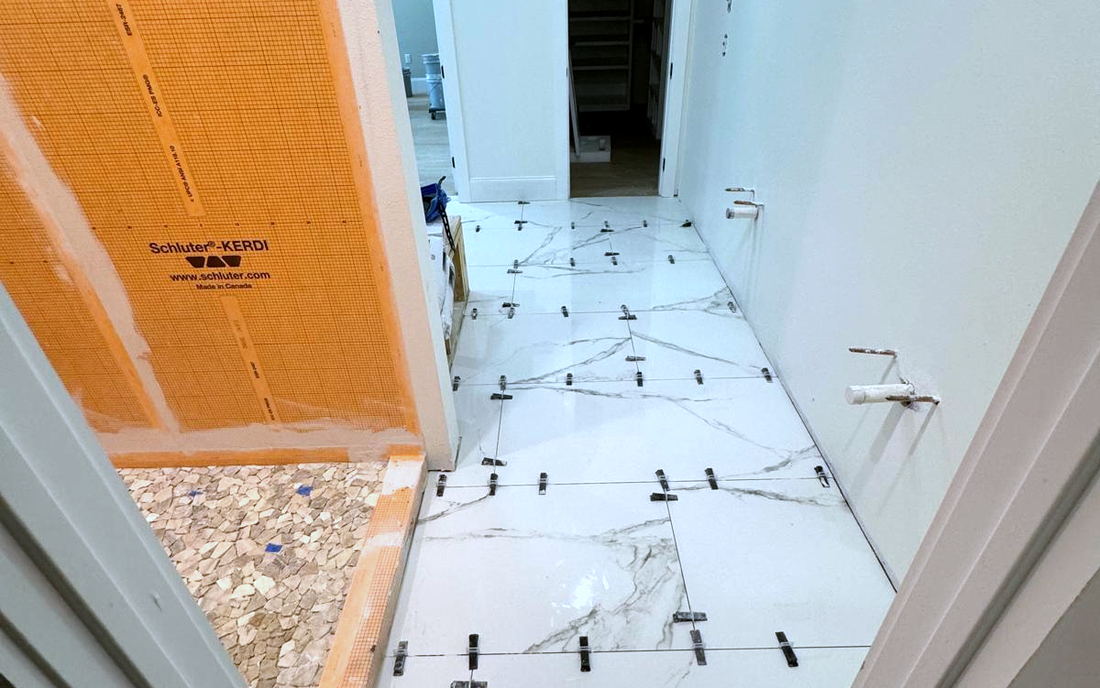
Shower floors deserve stricter attention than the threshold suggests, because they combine water, soap and a sloped surface. Smaller formats with more grout joints give additional traction, which is one practical reason mosaic remains common on shower pans.
Water absorption: what makes porcelain porcelain
The definition is numeric. Porcelain absorbs 0.5 percent or less of its weight in water. Ceramic absorbs more. That single property is why porcelain works outdoors in freeze-thaw climates, why it handles wet rooms without sealing, and why it is denser and harder to cut.
Watch for the phrase porcelain tile used loosely on products that do not carry the certification. If the spec sheet does not state the absorption figure, ask. In a climate this humid the difference between a true porcelain body and a dense ceramic matters most on exterior and wet-area installs.
Rectified edges and the joint they allow
Tile shrinks in the kiln, and it does not shrink perfectly evenly. Rectified tile is mechanically cut to exact dimensions after firing, so every piece matches and the edges are square. That is what makes very tight grout joints possible.
The trade is that rectified tile has nowhere to hide error. A tight joint shows any drift in the layout and any lippage between tiles immediately. Non-rectified tile has slightly softened, varying edges that need a wider joint but forgive a little more.
If you want the tight-joint look, budget for the substrate work that makes it possible. Asking for a sixteenth-inch joint on an uncorrected slab is asking for a floor that reads as a mistake rather than as precision.
Warpage: the number that decides large-format success
Long tiles are not perfectly flat. Most have a slight crown along their length, measured as warpage on the spec sheet. On a 12 by 24 it is manageable. On a 24 by 48 or a slab, it is the single biggest challenge in the installation, because the crown of one tile meets the edge of the next.
This is why leveling clip systems exist and why they are not optional on large formats. It is also why a 24 by 48 install costs more per square foot than a 12 by 24 install of the same product. Anyone quoting the same labor rate for both has not priced the actual work.
Shade variation and dye lots
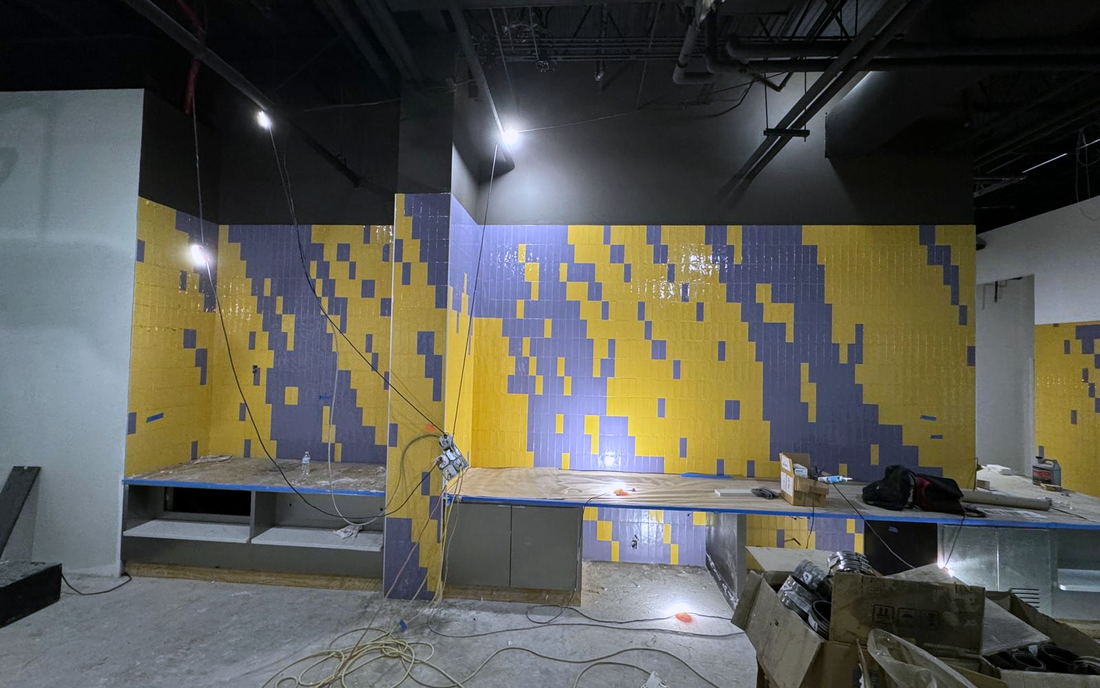
Spec sheets carry a shade variation code, usually V1 through V4. V1 is uniform, V4 has substantial variation between pieces. Neither is better. What matters is that you know which one you bought, because a V3 or V4 tile installed straight out of one box at a time produces visible patches of light and dark.
- V1: uniform appearance. What you see in the sample is the whole floor.
- V2: slight variation. Blending boxes is good practice but not critical.
- V3: moderate variation. Boxes must be mixed as you work.
- V4: substantial variation. Dry-lay a large area first and distribute deliberately.
Order about ten percent extra for a straight layout and fifteen for diagonal or herringbone. Keep the leftover box. Dye lots change, and in five years that box will be the only way to match a repair.
Five questions to ask before you buy
- What is the DCOF, and is this tile rated for a wet floor?
- Is it rectified, and what joint width does the manufacturer recommend?
- What is the shade variation code, and how many boxes should be blended?
- Is there a matching bullnose or trim piece, or will edges need a metal profile?
- Is the tile currently in production, and what is the lead time on a reorder?
That last question saves more projects than any other. Discovering mid-install that the tile is discontinued and the remaining stock is short by two boxes is a problem with no good solution. Confirm availability for the full quantity plus waste before you commit.
Questions we get on this
No. Price often reflects the printing technology and the design rather than durability. A moderately priced PEI 4 tile with a good DCOF will outlast an expensive polished tile in a kitchen. Read the numbers, then choose the look within the group that qualifies.
The tile itself, no. Cement-based grout benefits from sealing, and natural stone always needs it. Some manufacturers recommend sealing unglazed or textured porcelain to make cleaning easier, which is a maintenance choice rather than a requirement.
Yes, with the right selection. You need a tile rated for exterior use, a DCOF suitable for wet conditions, and an installation designed to drain. The substrate work outdoors is more demanding than indoors, and that is where exterior tile installs usually fail.