Start with moisture, not appearance
Most homes in Kenner, Metairie and the West Bank sit on a concrete slab, and a slab is never truly dry. It exchanges moisture with the ground beneath it year round, and in a climate with our humidity that exchange is significant. A moisture vapor emission test on a slab that looks perfectly dry can still come back high enough to rule out certain adhesives and certain products.
This single fact eliminates a lot of options before aesthetics enter the room. Solid hardwood over a slab is a difficult proposition here. Laminate can work over a slab with a proper vapor retarder, but its wood-fiber core means a standing leak is a replacement rather than a cleanup. Porcelain tile is essentially indifferent to slab moisture, and rigid-core vinyl is close behind.
So the first question is not tile or vinyl. It is what your specific slab reads, and whether the room is one that gets water. That answer narrows the field honestly.
Then ask how the room actually gets used
Rooms are not equal, and one house rarely wants one floor throughout. A kitchen takes dropped pans, dragged chairs, dishwasher leaks and the occasional broken glass. An entry takes grit tracked in from the driveway, which is the most abrasive thing that will ever touch your floor. A bedroom takes almost nothing.
- Kitchens and entries: hardness and water tolerance matter most, which favors porcelain.
- Bathrooms and laundry: water tolerance dominates, which favors porcelain or rigid-core vinyl.
- Living and bedrooms: comfort, warmth and sound matter more, which often favors vinyl or laminate.
- Upstairs rooms: sound transmission becomes a factor, and underlayment choice matters as much as the plank.
The reason vinyl plank has taken so much of the market is that it is the only product that is genuinely acceptable in all of those rooms at once. It is not the best in any single category. It is the least compromised across all of them, which for a whole-house install is often the smarter answer.
The comfort trade nobody mentions in the showroom
Porcelain is the harder, longer-lasting floor, and it is also the colder and louder one. In a house where someone stands at a counter for an hour a day or where children play on the floor, that hardness is a daily experience rather than a spec. Vinyl and laminate give underfoot slightly, and with an appropriate pad they are noticeably quieter.
There is a reverse trade too. Vinyl transmits the temperature of the slab, so a north-facing room can feel cool in January in a way that surprises people. Tile does the same thing but more so, which is why radiant heat and tile are so often paired in colder climates. In our climate neither is a real problem for most of the year.
Cost, honestly broken down
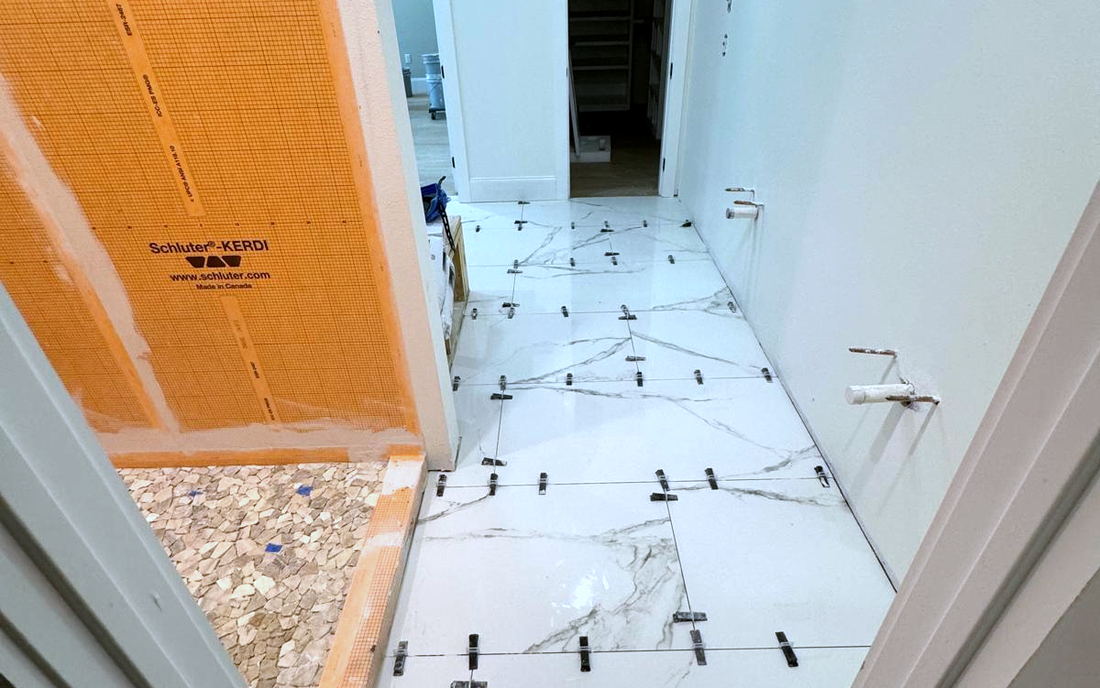
Material price is the number people compare, and it is the least useful one. The installed cost of a floor is material plus prep plus labor, and the prep line is where the two products diverge. Porcelain demands a flatter substrate than vinyl does, particularly in large formats, so a slab that needs leveling costs more under tile than under plank.
- Material: mid-grade porcelain and mid-grade rigid-core vinyl often land close together.
- Prep: tile is stricter about flatness, so leveling costs weigh more heavily on tile.
- Labor: tile takes longer per square foot, because setting, grouting and curing are separate stages.
- Lifespan: a properly installed porcelain floor can outlast several vinyl floors, which changes the math over 20 years.
For a homeowner planning to stay a decade or more, tile in the wet and high-traffic rooms usually wins on total cost. For a rental, a flip or a family that expects to change the look in seven years, vinyl is the rational choice and there is nothing second-rate about it.
Resale and the wood-look question
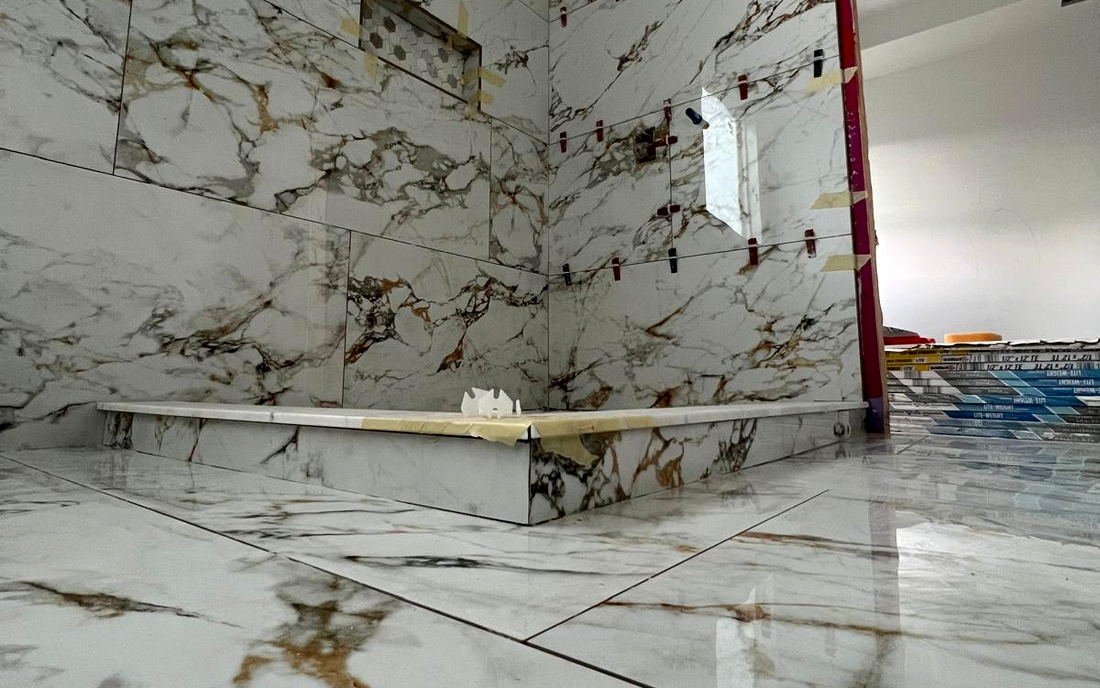
Buyers in this market respond well to continuous floors and to anything that reads as wood. Both products do wood convincingly now, and current wood-look porcelain at close range is difficult to distinguish from plank. Where porcelain gives itself away is at the grout joint, and where vinyl gives itself away is the sound and the feel underfoot.
If resale is a real consideration, the pattern that appraises well here is continuous flooring through the main living areas with tile in the wet rooms. Mixing three different products across four rooms reads as accumulated repairs rather than as a design decision, whatever the individual quality of each floor.
Four mistakes we get called to fix
- Large-format tile set on an unleveled slab, which produces lippage you can feel with bare feet.
- Floating vinyl pinched at a wall or under a cabinet toe kick, which peaks at the seams months later.
- Laminate in a bathroom, where one overflow ends the floor.
- Polished porcelain on a bathroom floor, chosen from a showroom sample without checking the slip rating.
All four are installation or specification errors rather than product failures. That is the real answer to tile versus vinyl: both are good products, and the install decides which one you end up happy with.
How to decide in one sitting
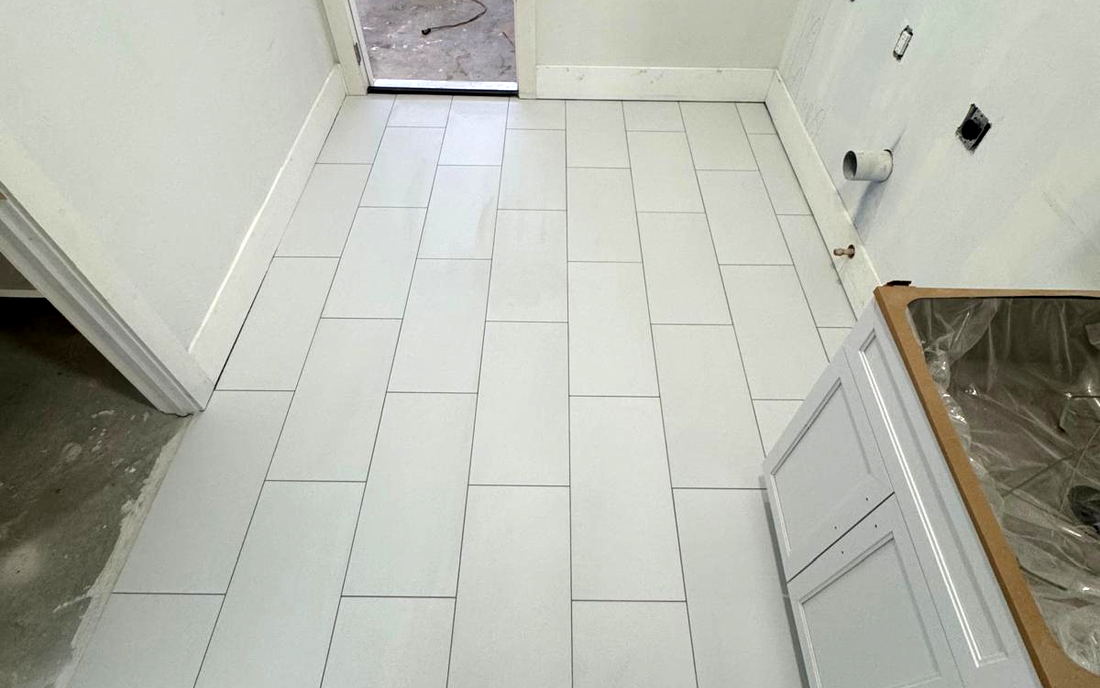
Walk your house room by room and write down two things per room: whether water is a realistic event there, and how many hours a week someone stands or plays on that floor. Then put porcelain where water wins and vinyl where comfort wins, and keep the count of different products to two. Take the slab moisture reading before you buy anything.
If you want a second opinion on a specific room, we look at floors in Kenner, Metairie and Harahan every week and we will tell you when the cheaper option is the right one. That happens more often than you might expect from a company that installs both.
Questions we get on this
You can, and rigid-core vinyl is the product most often used that way because it is acceptable in wet rooms and comfortable in living spaces. The compromise is that it is not as hard as porcelain in the entry and kitchen, which are the rooms that wear fastest.
Yes. Rectified wood-look planks can go as tight as a sixteenth of an inch with a matched grout, which reads almost as a continuous surface from standing height. Tighter than that is not achievable, because tile needs a joint to absorb size variation and movement.
Not a bad choice, a narrower one. It performs well in bedrooms, hallways and living rooms with a proper vapor retarder over a slab. The reason we steer people away from it in kitchens and baths is that its core does not survive standing water.